
Jaden Industries Beginner Tips for a Clean First Factory
Start Jaden Industries with a plan: build backward from the consumer, protect your budget and leave room for research on the first islands.
The first hour of Jaden Industries is deliberately gentle, but gentle does not mean thoughtless. The players who bounce off usually make the same few mistakes: they build forward from the extractor instead of backward from the consumer, they spend the budget on belt length, and they crowd a machine that will need a second input later.
These tips are for the opening islands, before research and medals complicate the scoring. They assume you have read the tutorial prompts and know how to place an extractor, a conveyor and a mixer. If you have not tried the game yet, the demo→ covers this exact ground for free.
Store facts were checked against the Steam and Nintendo listings on November 25, 2026. Systems that are not publicly confirmed are labelled as unconfirmed. Official source: Jaden Industries on Steam ↗
1. Build backward from the consumer
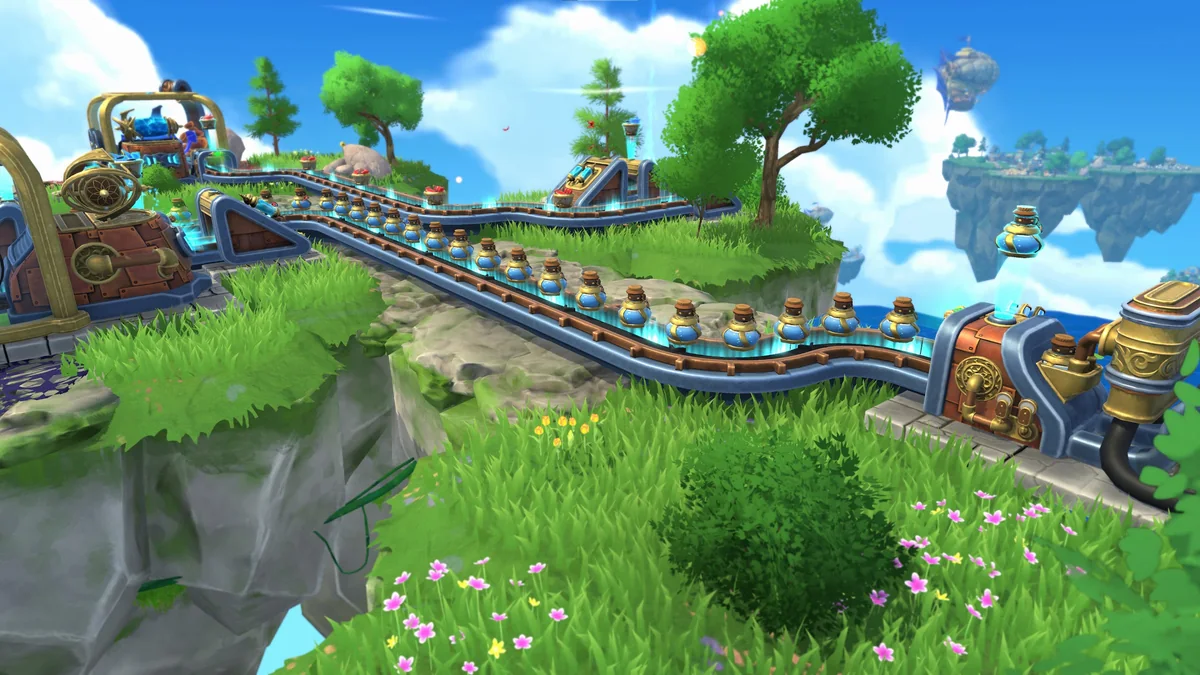
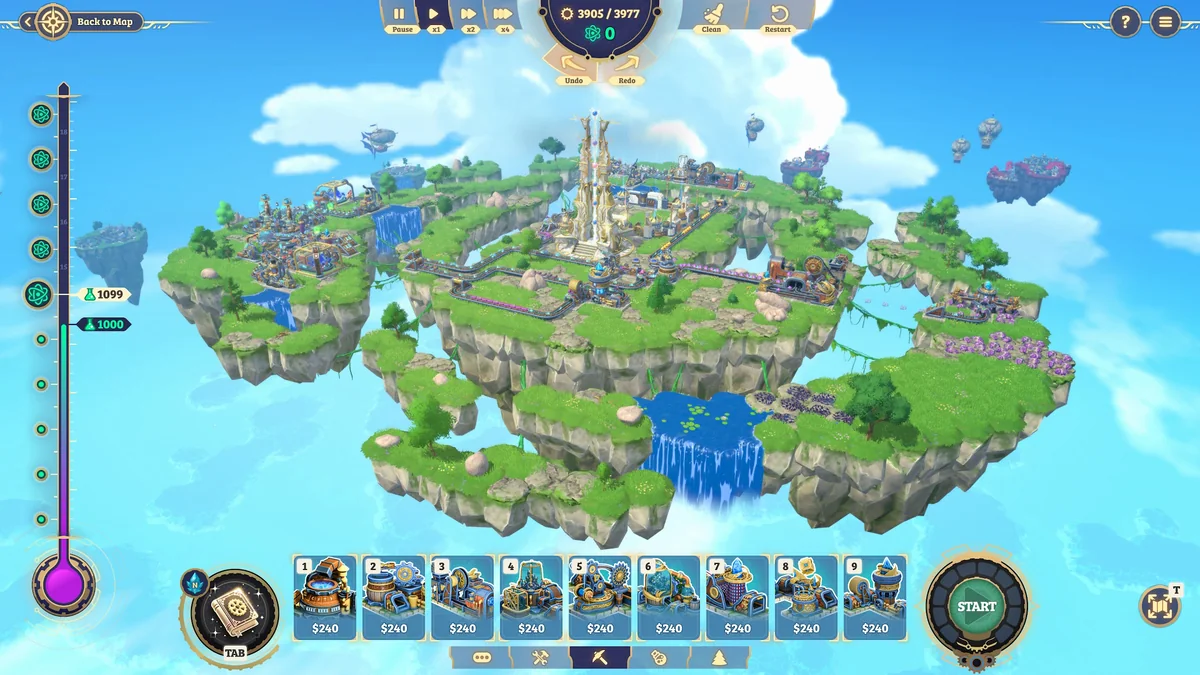
The island's goal is a finished product, not a beautiful network. Find the consumer or output tile first, then ask what feeds it, then what feeds that machine. Working backward keeps your belts short and prevents the classic beginner mistake: a long trunk line that arrives at the wrong side of the final machine.
A practical method:
- Place the output or consumer.
- Place the final processing machine next to it.
- Trace each required input back one step.
- Only then place the extractor.
You will replace this first layout later. That is fine. The goal is a working chain that fits the budget, not a forever factory.
2. Treat the budget as a design constraint, not a number
The budget system rewards efficient spending, and medals are tied to how well you score. A layout that works but overspends still functions; it just earns less. Beginners often ignore the counter until the island ends, then wonder why the reward is small.
Check the budget before you place a long conveyor. Ask whether a shorter route, a different machine position, or a second extractor closer to the line would save more than it costs. The budget and medals guide→ explains the scoring logic in more detail.
3. Leave one tile of breathing room
Compact does not mean crammed. Leave at least one empty tile beside each machine that might need a second input, and keep a clear lane for future belts. The island grid is small, and a machine surrounded on all four sides is a machine you will demolish later.
This is especially important around mixers. A mixer with one input connected and three sides blocked looks efficient until the next recipe step needs a second ingredient. The extra tile costs a little space and saves a rebuild.
4. One product per line
Resist the urge to multiplex. A belt carrying two ingredients looks clever, but it makes throughput unpredictable and debugging miserable. Dedicated lines are easier to read, easier to extend, and easier to tear down when a new technology changes the recipe.
If space forces a shared corridor, share the corridor but not the belt. Run two parallel belts through the same gap. It costs more, but it keeps each chain legible.
5. Rotate before you rebuild
Conveyor direction errors are the most common cause of a dead line. Before deleting a machine, check the output arrow and the belt direction. A single reversed tile can make a working factory look broken. The same goes for machine orientation: some processing machines have a distinct input and output side.
6. Research with a goal, not a shopping list
The technology tree unlocks machines and efficiency upgrades. Early on, pick the unlock that solves the island in front of you rather than the one that sounds strongest in the abstract. If your current bottleneck is extraction, unlock extraction speed. If it is belt throughput, unlock the next conveyor tier.
The research order guide→ covers the priorities, and the achievement data backs up the pacing: the first technology achievement is unlocked by 56% of players, while the first science production achievement sits at 53%. Most players engage with the tree early, but not all of them push it far.
7. Revisit islands instead of restarting
Progress is persistent, and you can return to earlier islands with new technology. A layout that scored poorly in hour two may be easy to improve in hour six. Revisiting is usually faster than starting a fresh save, and it is how the medal system is meant to be played.
8. Do not chase every achievement on the first pass
Some achievements require deliberate constraints, such as finishing a level without a conveyor belt. Trying to do those while also learning the systems is a recipe for frustration. Finish the campaign first, then use the achievement guide→ to plan a cleanup run.
9. Play the first island twice
The first island is small and cheap to rebuild. Finish it once, then tear it down and try a tighter version. You will learn more from one rebuild than from three new islands, and the second attempt usually reveals which belt was unnecessary.
10. Use the demo as a testing ground
The demo is free and covers the opening systems. Use it to test camera speed, text size and controller feel before you commit on a platform. If the demo runs well on your PC, the retail build will run similarly; the requirements are modest.
FAQ
What should I build first in Jaden Industries?
Place the output or consumer, then work backward through the final machine to the extractor. This keeps the first layout short and cheap.
Should I spend the whole budget?
No. The budget is a scoring constraint. Leave headroom for a second input or a future belt upgrade.
Can I restart an island?
You can revisit islands with persistent progress. Rebuilding an early island with new technology is usually better than starting a new save.
Do I need to play the demo first?
No, but it is free and covers the opening systems. It is the best way to test whether the pacing suits you.